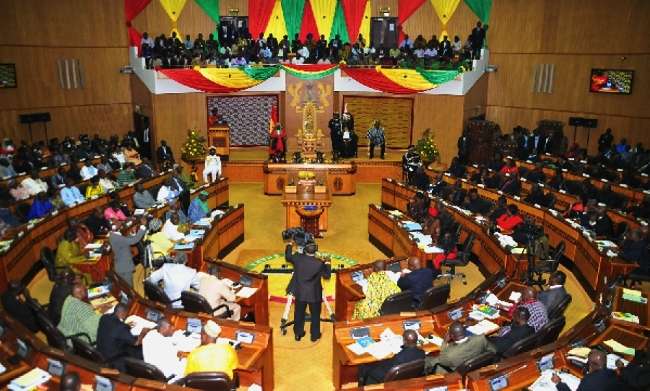
Right to Information bill goes through second reading in Parliament
The Right to Information Bill has been read the second time in Parliament, given the indications that the House is now ready to pass the Bil
Right to Information bill goes through second read
The Right to Information Bill has been read the second time in Parliament, given the indications that the House is now ready to pass the Bill into an Act, after several attempts by successive governments.
The objective of the Bill, is to provide for the operationalisation of the constitutional right to information held by public and some private institutions, subject to exemptions that are necessary and consistent with the protection of public interest in a democratic society.
The Bill also seeks to foster a culture of transparency and accountability in public affairs and to provide for related matters.
The deliberations of the joint Committee on Constitutional, Legal and Parliamentary affairs, and Communications, several memoranda on the Bill from identifiable Civil Society Organisations and the general public were received to enrich the Committee's work.
Providing some backgrounds to the Bill, Chairman of the Committee on Constitutional, Legal and Parliamentary affairs, Ben Abdullah Banda, said "good governance requires active participation of all citizens in the governance of a country.
One of the indisputable ways of achieving this is through a regime of rights to information".
According to him, the right of citizens to public information is recognised globally as an integral part of human rights, stressing that, “this is evidenced by the various international conventions such as the Universal Declaration of Human Rights (1948) and the African Charter on Human and Peoples’ Right (1986)".
In Ghana, right to information is recognised as a fundamental human right under Article 21(1) (f) of the Constitution. This provision confers on all persons in Ghana the right to public information, subject to such qualifications and laws as are necessary in a democratic society.
Pursuant to the above, various attempts have been made in the past to pass a Bill into law to give effect to this constitutional right.
A Bill was introduced in the 6th Parliament, but could not be passed into law, before its dissolution. In the desire to make this constitutional right to information a reality, the current NPP government has introduced this new Bill to Parliament, with the expectation that, this time, it would be finally passed into law.
The Committee observed that the Right to Information Bill gives the right to individuals to access information held by public and some private institutions, however it does not apply to information already held in archives, museums and libraries.
The Bill also details the procedure by which information held by certain private sector entities could be accessed.
A provision has been made in the Bill to allow for a Legislative Instrument to prescribe the scope of access to information.
With the passage of the Bill, all public institutions in the country would be mandated to compile and publish manuals containing their official information within twelve months from entry into force of the law.
Mr. Banda stated that, "the manuals shall contain the list of departments or agencies under the public institutions and their responsibilities, types of information to be accessed free of charge or those to be subject to the payment of fees as well as contact details of their information officers".
The Attorney-General and Minister for Justice would be required to issue guidelines for the preparation of the manuals.
This is to ensure that public information is managed in an efficient manner in the implementation of the provisions of the Bill.
However, the Committee noted that, there already exists a legal framework for public information management in the Public Records and Archives Administration Act, 1997 (Act 535) and recommends to Parliament to be guided by same.
When it comes to fees and charges, the Committee took note of the fee regime provided under the Bill as a condition for Public information.
"As part of the conditions for the application for information, applicants would be required to pay a prescribed fee determined in accordance with the Fees and Charges (Miscellaneous Provisions) Act, 2009 (Act 793). Further to this, each public institution would also be empowered to request an applicant to pay a deposit where the cost of reproducing the information is likely to exceed the cost of the application fee".
The report said, the fees collected are to be retained by the public institution to defray expenses incurred in the performance of their functions under the law.
But an application for the reproduction of personal information of applicants, request for information involving public interest and requests by persons with disability are exempted.
"Whilst the Committee appreciates the fact that the cost of processing applications must be borne by an applicant, it disagrees with the payment of application fees and deposits. This is because payment of both an application fee and reproduction fee may be a hindrance to the exercising of the constitutional right of some people to access information".
The Bill will establish a Right To Information Commission which will be an independent entity to monitor the implementation of the right to information in Ghana.
Story by: Edzorna Francis Mensah.
GBCONLINE
---DECRYPTED---